

ISSUE 03: Lifestyle | Creating Summer Nostalgia as an Adult
Find me in the swimwear aisle.


When I think back to my childhood summers, I remember very little, and the little I remember is atypical of a quintessential childhood summer. On the last day of every school year, filled with excitement on completing another grade, I would write some variation of HAGS into as many yearbooks as I could, and my classmates would wish the same for me. Then, I would proceed to spend my entire summer doing the exact opposite, but not by choice.
My parents were first generation immigrants from Taiwan (and technically so am I), and they placed a huge amount of pressure on me especially as their eldest daughter to perform to an impossible standard in school. To be clear, my parents were not hovering tiger parents and didn’t force my sister and I to work towards a particular college or career, but they viewed their move as a risk and sacrifice. They wanted confirmation via our excellent performance in school that they’d made the right choice to move to the States. To help guarantee that, they forced my sister and I into self-made summer camps. Spoiler alert: there were no friendship bracelets or jumping off lake docks.
Thus, a couple weeks or so after scribbling my last HAGS, I would spend most of my summer weekdays studying ahead for the grade ahead in some variation of:
9 am - reading comprehension
10 am - math workbook problems
12 pm - lunch
1 pm - math workbook problems
3 pm - Chinese reading practice
4 pm - biking (ok so I guess we had this)
6 pm - dinner
8 pm - reading for leisure
9 pm - tv time
10 pm - bedtime
And yes, leisure and tv time had to be written into the schedule and time-blocked at both ends. Each summer spent like this, I would comfort myself in the thought that at least the school year ahead would be smooth because I’d spent all my time preparing unlike the other kids who were off doing the things I was longing to do.
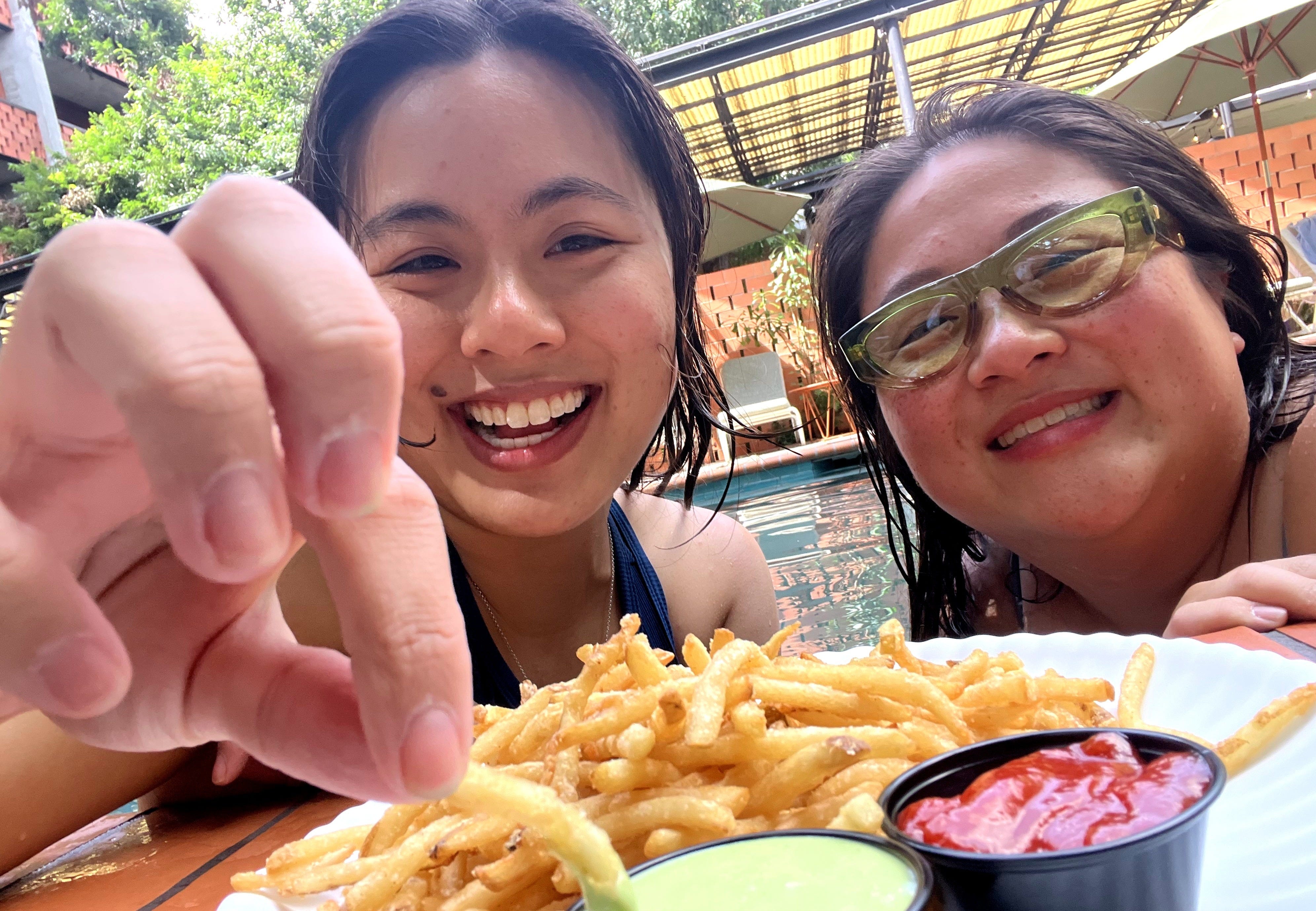
This longing grew and grew until it dulled into apathy and disdain in early adulthood. What was so great about summer anyway? Clearly, I wouldn’t know, and I continued this way until just a couple years ago. Perhaps it was Saturn returning, or realizing that astrologically I’m a summer baby (and do I explore what that means?), or finally letting go of the learned summer grind as my career and creative goals actualized. I started noticing what beaches people were going to, the food people were bringing to their grill outs, the subtle sparkle of pool water under the sun. Now, my view and affinity for summer has changed so much that I feel an uncontrollable, gravitational pull to swimsuit shopping. If there’s a rack of bikinis, that’s where you’ll find me.
Nostalgia is commonly understood and defined as a sentimental longing for something in one’s past. The longing is something I’m experiencing again tenderly, and in my work as a designer, I’ve learned that you can evoke a sense of nostalgia by helping people engage with sensory triggers, whether those triggers were present in their own memories or not. For example, in working with Asian American cultural nostalgia, I utilize visual triggers like artwork or tactile and olfactory through food. For my own relationship to summer, I’ve been evoking and creating my own sense of summer nostalgia by wading in cool pools with friends, getting bit by ants on a beach towel that’s way too small, or simply feeling the warmth of the sun’s rays compared to the breeze of AC. I’m also replacing my mandatory childhood summer schedules with an optional summer bucket list filled with outdoor arts and crafts, flip flops and long lunches.
Michelle Kao is the creative director of FLOAT + FLOW Magazine. She is a designer, secret nail artist, and food enthusiast. She most desires to lounge around in the cozy presence of her cat, Ade, but is currently splitting the difference to build a more beautiful world.
We’re trying something new! This publication is and always will be about accessibility and creativity. However, if you’d like to support our work, consider Buying Us A Coffee, a pay what you can model that helps us continue making the work you love. This will go towards purchasing materials, future print projects, and of course, coffee.
 | A guest post by
|